
901

King Alfred’s will
King Alfred died leaving the manor of Columtune to his son. This is the first written reference to Cullompton.
1066
Norman conquest
1068
Battle Abbey gets Cullompton Church
Saint Andrew’s Church and the glebe given to Battle Abbey by William the Conqueror.
1200s
Earls of Devon
The manor of Cullompton was granted to the Earls of Cullompton.
1215
Magna Carta
1278
Market and Fair granted
A market and fair were granted [by King John -either date or monarch is wrong. J died in 1216]. The manor of Cullompton was donated to Buckland Abbey by Countess Amica of Devon.
1365
Town watercourse
The town was granted a supply of water by the Abbot of Buckland. It flowed from Coombe farm via Shortlands to the town centre.
1430
Nave and Aisle of Saint Andrew’s church built
1470
Chancel and clearstory of Saint Andrew’s built
1476
First book printed in England
1522
Almshouses donated
John Trott died and in his will left money to create the Alms houses in Cullompton
1526
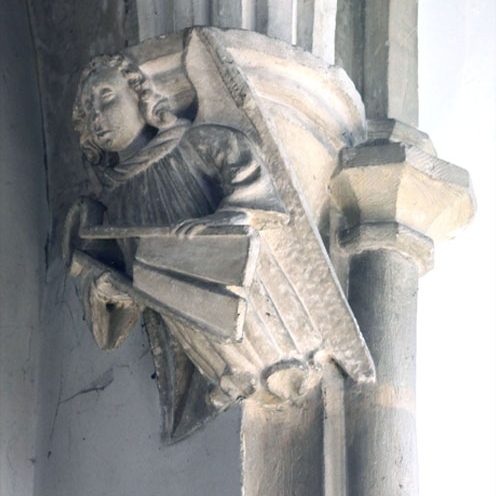
John Lane’s aisle
John Lane, a wealth cloth merchant left money in his will to build an extra aisle in Saint Andrew’s church which can still be seen today. It was completed about 1529.
1530s
Dissolution of the monasteries
Under King Henry VIII, monasteries in England, Wales and Ireland were disbanded. He appropriated their income and took their assets. A large proportion of the land in the parish of Cullompton changed hands as a result of this.
1540s
Tower of St Andrew’s church completed
1565
Humphry Paris buys the Walronds
Humphry Paris an importing merchant purchased the property now called the Walronds (it was not known by this name until much later)
1602
Fire at The Walronds
A fire destroyed the Walronds and several neighbouring properties includingc
1603
Walronds, Manor house and Merchant’s House rebuilt
1609
Two fulling mills at Kingsmill
Two fulling mills (used in cloth manufacture) at Kingsmill until 1664
1642-1651
English Civil war
War between the Royalists led by King Charles I and Parliament, led by Oliver Cromwell. In 1645 General Fairfax drove Lord Millar out of Cullompton.
1663
George Fox preaches in the town
George Fox, A Quaker preaches in the town
1670
Quaker meeting house built at Spicelands
Spicelands is near Uffculme and there is still a meeting house there
1698
Dissenters Meeting House built
A meeting house for dissenters was built at Pound Square. Now the Unitarian Chapel.
1700
3 double mills in Cullompton
A lease for six mills in the unusual formation of 3 double mills at Higher, Middle and Lower Mills
1716
Public meeting to repair the watercourse
1725
Fire in church tower
1738
Cloth riots in Tiverton
People from Cullompton joined in. Cullompton workhouse built
1739
Sergemakers William Bidwell and John Fowler worked at the Walronds
1748
John Wesley Preached at Cullompton
This was the first of 22 visits he made to the town, the last was in 1789.
1764
First Wesleyian Chapel built
1777
120 people in Cullompton Workhouse
Also 50 in Uffculm, 60 in Silverton
1791
Serge-makers association
Thomas Fox wrote to Nehemiah Upcott re formation of a serge-maker association
1792
Bradfield Mill built
Built by Brown and Fowler
1795
Lease for Nordon Mill
Lease from HRH Prince of Wales to William Upcott for Nordon Mill, Bradninch.
1797
Coldharbour Mill
Thomas Fox purcahsed land, water and grist mill at Uffculme to build Coldharbour Mill.
1798
Hand weaving in Cullompton workhouse
1801
William Upcott inherited Shortlands
Joghn Selwood was a Cullompton Tanner at this time
1816
William Upcott employed weavers
William Upcott employed out of-work-weavers and spinners from Tiverton and started trade with Opporto
1821
Waterwheel at Coldbharbour constructed
1822
Fire destroyed Bradfield Mill
1830-5
Chartist Meetings in Cullompton and Tiverton
1831
Middle Mill
William Upcott used Middle Mill and factory for wollen manufacture. Also built reservoir near Shortlands. Fire at Selwood’s Tannery
1833
National School
First National School in Town. At Gravel Walk, near the church.
1834/5
Bradfield Mill owners bankrupt.
The owners were Brown, Fowler and Davy
1835
Cullompton workhouse closed
There was a change in the poor law system at this time
1839
Great Fire
The great fire of Cullompton destroyed 264 houses.
1840
William Upcott unsuccessfully prosecuted workers for striking
Report to House of Lords on hand loom weavers
1847
William Upcott died
Business passed to sons William and JS Upcott. Mob of women and children attacked the Selwood’s house in Pound Square for speculating in corn.
1849
Restoration of Saint Andrew’s Church
1850
Lower Mills to let
A grist, flour and flock mill
1859
St Andrew’s Wagon roof reclaimed and gilded
1865
Steam power introduced at Coldharbour Mill
1867
Fire at Selwood’s Tannery
1870
Upcotts sell mills at Cullompton, Culmstock and and Bradfield
1871
Court Tannery established
At Court Farm. Existed until 1906.
1872
Church of England School built
1874
Workers ask Fox Bros. to reopen Yarn Mill
Workers at Culmstock ask Fox Brothers to reopen the yarn mill.
1876
Fox’s Cullompton factory opens
Also the date of opening of the Culm Valley Light Railway to Hemyock
1910
The Weavers set up
The Cullompton Weavers were set up in the stable at Heyford House
1912
Unitarian Chapel built on site of dissenters meeting house
1919
Cullompton lighted with gas
1958
Fire at the Tannery puts 100 men out of work
1960
Fox’s Cullompton Factory closes
1963
Culmstock mill closed
1975
Culm Valley Railway closed
1977
Fox Brothers factory at Coldharbour closed
1982
Coldharbour Mill reopens as a working wool museum
2011
The Hayridge and the Community Centre opened to the public
2014